Embroidered vs Printed Chef Coats: Which to Order
stitched or printed, matched to your kitchen.
Embroidered chef coats are the better choice for most kitchens, because stitched logos and names stand up to hot washes and look premium at the pass, while printed chef coats win for large back designs and full-color artwork. Customized Chef Coats offers both, lets you mix them in one order from a minimum of 12, and shows each option on a free mockup within 24 hours.
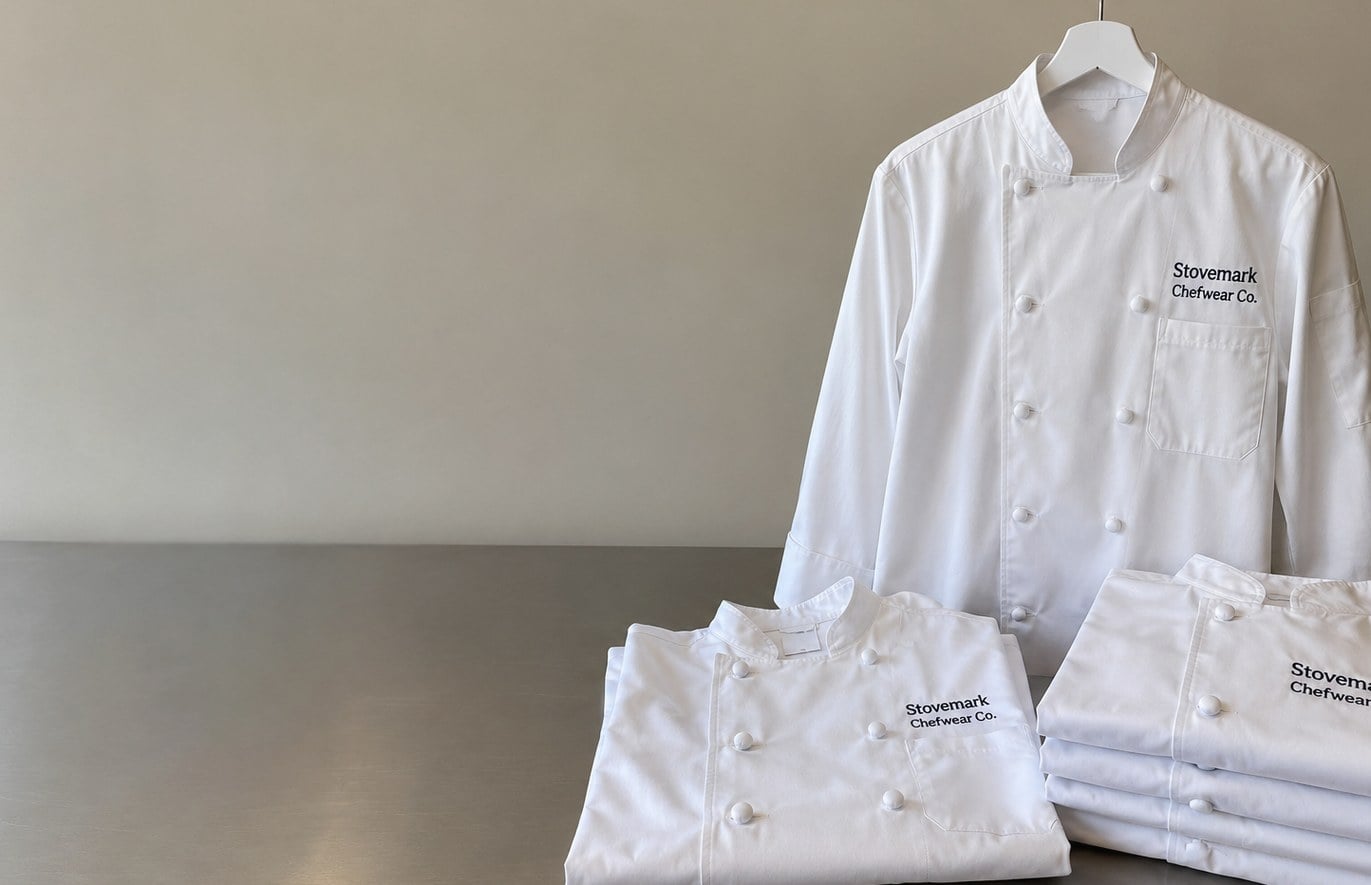
Embroidered or printed chef coats for every job in the kitchen.
Chest logo for daily service
An embroidered logo on the left chest is the classic choice for chef coats that are washed hot after every shift.
Names and titles
Stitch each cook's name or a title such as Sous Chef under the logo so the line reads clearly at the pass.
Large back designs
Print a bold restaurant name or event graphic across the back of the chef coat where embroidery would feel stiff.
Full-color brand marks
Logos with gradients, photos or many colors reproduce more faithfully as a print than as thread.
Executive and head chef coats
Tone-on-tone embroidery gives executive chef coats a quiet, tailored finish that reads as senior.
Event and competition coats
Printed sponsor marks or event names suit chef coats made for a cook-off, festival or demo kitchen.
Custom chef coats styles you can order.
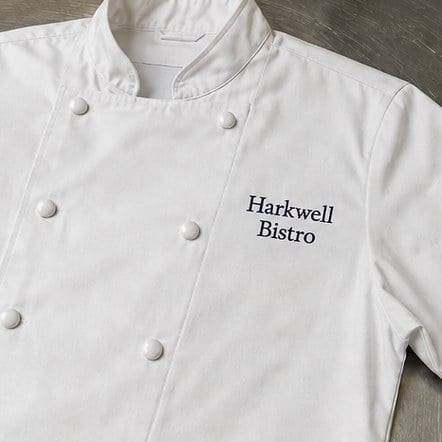 Classic Double-Breasted Chef Coats | Custom Printed in Bulk
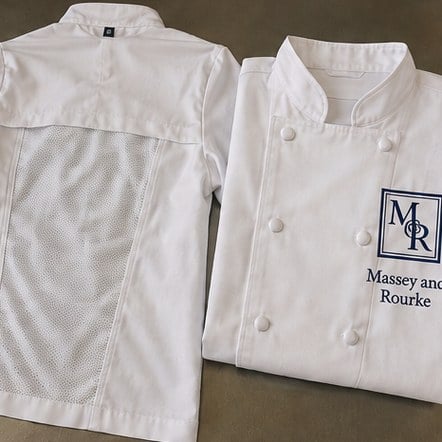 Lightweight & Vented Chef Coats | Custom Printed in Bulk
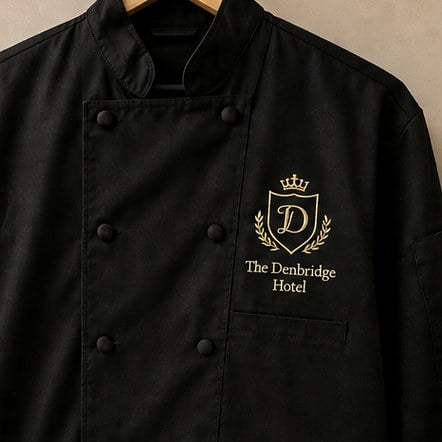 Executive Chef Coats | Custom Printed in Bulk
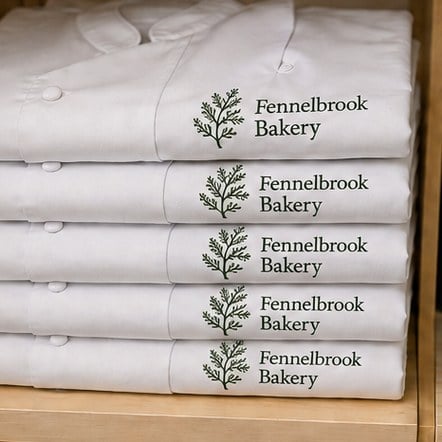 Student & Culinary School Sets | Custom Printed in Bulk
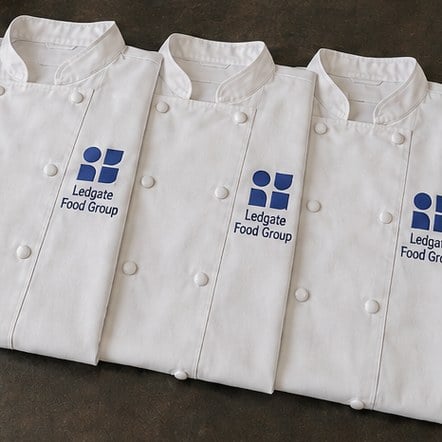 Chef Coat Uniform Programmes | Custom Printed in Bulk
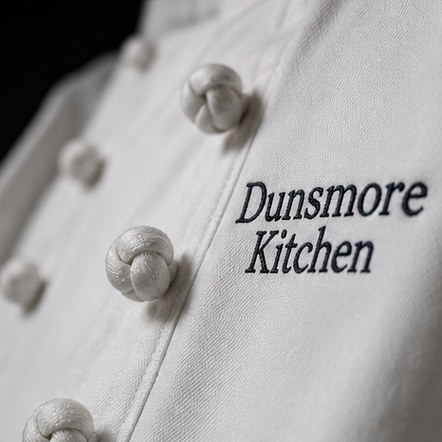 Custom printed chef coats in bulk
The right decoration for how your chef coats are worn and washed.
Customized Chef Coats looks at your logo, your laundry routine and where each mark sits before recommending embroidery or print. You see both on a free mockup, so the choice is made on what the chef coat will actually look like rather than on guesswork.
- Honest advice on embroidery versus print for each placement
- Mix both methods on one chef coat
- Unlimited free revisions before you approve
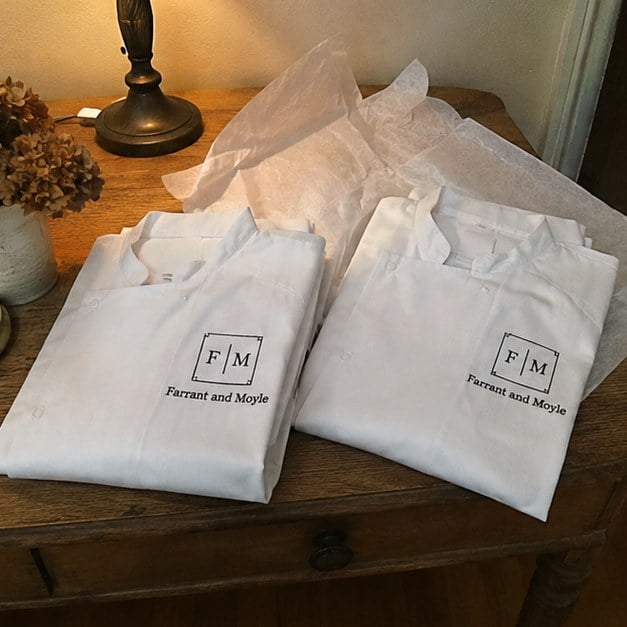
Custom chef coats decorated the way your kitchen works.
Methods
Embroidery and printing are both available, and one chef coat can carry a stitched chest logo with printed back text.
Placements
Left chest, right chest, sleeve, collar and back placements, with names and titles varying coat by coat.
Quantities
Orders start at 12 chef coats, mixing classic, vented, executive and women's fit styles in one run.
Timing
Free mockup within 24 hours, standard turnaround about 2 weeks, and express shipping when the date is tight.
Should I order embroidered or printed chef coats?
Most kitchens should order embroidered chef coats for the chest logo and names, and add printing only where a design is large or full color. Embroidery is stitched into the fabric, so it keeps its shape through hot washes, bleach-safe laundry routines and the daily wear a working kitchen puts on a coat. Printing lays ink onto the surface, which makes it ideal for big areas and fine color detail but more exposed to abrasion over time.
Customized Chef Coats treats the decision as a placement-by-placement choice rather than one method for the whole order. A typical restaurant order ends up with an embroidered logo on the left chest, an embroidered name underneath and, for some teams, a printed restaurant name across the back. Catering crews, culinary schools and event kitchens often lean more on print because their designs are bigger and their coats see fewer service hours.
- Choose embroidery for logos, names and titles worn every shift
- Choose print for large back designs, gradients and photographic marks
- Combine both when the coat needs a premium chest and a bold back
How do embroidered and printed chef coats compare side by side?
Embroidered and printed chef coats differ most in durability, detail, feel and the size of design each method handles well. The table below sets out how the two methods compare on the points kitchens ask about most, so you can match each placement on the chef coat to the right decoration.
| Factor | Embroidered chef coats | Printed chef coats |
|---|---|---|
| Laundry durability | Excellent through hot and commercial washes | Good, but surface ink can wear with heavy abrasion |
| Fine detail | Best for bold logos and clear lettering | Best for thin lines, small text and gradients |
| Color range | Limited to thread colors | Full color, including photographic artwork |
| Large areas | Can feel stiff and heavy across the back | Stays flexible over large designs |
| Look at the pass | Raised, textured and premium | Flat, crisp and graphic |
| Names per coat | Classic choice for individual names | Works well, especially for bold back names |
Verdict: embroidery for anything on the front that is worn daily, print for anything big, colorful or on the back. If your logo sits on the borderline, ask for both versions on the mockup and compare them before you approve.
Which decoration lasts longer through kitchen laundry?
Embroidery lasts longer than print on chef coats that go through frequent hot or commercial laundering, which is why it remains the default for restaurant uniforms. Thread is sewn through the fabric, so there is no surface layer to crack or peel, and a well-digitized logo keeps its shape wash after wash.
Printed chef coats can still hold up well when the kitchen follows a sensible care routine: wash inside out, avoid ironing directly over the design and keep harsh stain treatments off the printed area. Prints placed on the back, where there is less contact with counters and aprons, tend to stay sharp longer than prints on the chest or sleeves.
If your coats are handled by an outside laundry service, embroidery is the safer choice for the main logo. For a deeper look at how decoration fits into a laundry routine, the chef coat uniform programmes page covers reorders and replacement cycles, and the guide on owning versus renting chef coats explains how laundry contracts affect decorated coats.
Which method works best for each chef coat style?
Each chef coat style suits embroidery or print a little differently, depending on the fabric, the cut and who wears it. Classic double-breasted chef coats take embroidery beautifully on the chest panel, while lightweight vented chef coats often benefit from keeping decoration off the mesh or ventilation areas so airflow is not reduced.
- Classic double-breasted: embroidered chest logo and name; optional printed back. See classic double-breasted chef coats.
- Lightweight and vented: embroidery on the solid chest panel, print kept away from mesh. See lightweight and vented chef coats.
- Executive: tone-on-tone or contrast embroidery for a tailored, senior look. See executive chef coats.
- Women’s fit: same decoration options, with placement adjusted to the shaped cut. See women’s fit chef coats.
- Student sets: embroidered school crest with printed or stitched student names. See student and culinary school sets.
Because the minimum order is 12 chef coats across styles, a kitchen can decorate each style differently in one run while keeping the logo consistent.
How do logo colors and detail change the choice?
Logo detail and color count are often what decide between embroidered and printed chef coats. Bold logos with solid shapes and clear lettering stitch cleanly, while logos with very thin lines, tiny text, gradients or photographic elements reproduce more faithfully as a print.
When a logo is designed for screens, Customized Chef Coats can often simplify it for embroidery by thickening fine strokes, reducing the number of colors or dropping a tagline that would be too small to read in thread. The simplified version is shown on the mockup, so nothing changes without your approval. If the brand team does not want the logo altered, printing keeps it exactly as drawn.
Coat color matters too. White chef coats show almost any thread or ink color clearly, while black and pinstripe coats need lighter or metallic-toned thread and bright ink for contrast. Send a vector file such as AI, EPS, SVG or PDF if you have one; a high-resolution PNG also works for the first mockup.
How do you order a mix of embroidered and printed chef coats?
Ordering a mix of embroidered and printed chef coats takes the same steps as any custom order, with the decoration choice made per placement on the mockup. Customized Chef Coats returns the first mockup within 24 hours, offers unlimited free revisions and does not charge anything until you approve the design.
- Send your logo, coat styles, sizes and the name list through the custom quote form.
- Say which placements you want embroidered, which printed, or ask for a recommendation.
- Review the mockup, compare both methods where it is close, and request changes.
- Approve the design; production and delivery take about 2 weeks.
If you need the coats sooner, mention the date on the quote request so express shipping can be checked before approval. The full process is laid out on the how it works page.
From your logo to delivered chef coats in four steps.
Send your artwork
Upload your logo or describe the idea and tell us the quantity you have in mind.
Get a free mockup
A designer returns a mockup of your chef coats with the artwork in place. Unlimited free revisions.
Approve the design
Nothing is produced until you approve the mockup, and you pay nothing before that.
Receive your order
Standard production is about two weeks after approval; faster turnaround is available with express shipping.
Custom chef coats for kitchens choosing between embroidery and print, answered.
Which decoration method suits a chef coat logo with fine detail or small lettering?
A chef coat logo with fine detail, hairline strokes or very small lettering usually reproduces better as a print, because thread has a minimum stitch width that can blur tiny elements. Bold logos with solid shapes stitch cleanly. Customized Chef Coats can show both versions on the free mockup so you can judge the detail yourself before approving anything.
Can a printed chef coat logo reproduce a full-color or gradient design?
A printed chef coat logo can reproduce full-color artwork, gradients and even photographic elements that embroidery cannot match with thread. Printing is the better route when the brand mark relies on subtle color shifts or many colors. Keep in mind that a printed design sits on the fabric surface, so it benefits from gentle washing and no direct ironing over the print.
Does embroidery make a chef coat feel heavier or stiffer at the chest?
Embroidery adds a little structure to a chef coat where the logo is stitched, which most cooks barely notice on a standard chest logo. Very large embroidered designs, especially across the back, can feel stiffer and warmer. For big back graphics, printing keeps the chef coat flexible and light, which matters most on lightweight and vented coats worn on hot stations.
Can one chef coat order combine an embroidered logo with printed back text?
One chef coat order can combine an embroidered chest logo with printed text or graphics on the back, and many kitchens choose exactly that mix. The stitched front looks premium at the pass, while the printed back stays light and bold. Customized Chef Coats shows both placements on the same mockup so the whole coat is approved at once.
Is printing or embroidery better for a large design across the back of a chef coat?
Printing is usually better for a large design across the back of a chef coat, because a big stitched area becomes stiff, heavy and warmer to wear. A print stays flexible, handles full color and reads clearly from across a dining room or event space. Embroidery remains the stronger choice for smaller back marks such as a short restaurant name.
What thread colors stand out best on black or pinstripe chef coats?
Black and pinstripe chef coats look best with white, light gray, gold-toned or other high-contrast thread colors, because dark thread disappears into dark fabric. Tone-on-tone black stitching is a deliberate, subtle option for executive coats. Customized Chef Coats can preview several thread colors on the mockup so you can pick the one that matches your brand.
Can kitchens iron printed chef coats without damaging the design?
Kitchens can iron printed chef coats safely by turning the coat inside out or pressing around the printed area rather than directly on it. Direct heat on the ink surface can mark or soften a print over time. Embroidered chef coats tolerate pressing more easily, which is one reason kitchens that iron daily often choose stitched logos.
Does decoration on vented chef coats interfere with the mesh panels?
Decoration on vented chef coats is placed on the solid fabric panels, such as the chest or upper sleeve, rather than across the mesh, so airflow is not reduced. Customized Chef Coats checks each placement against the vent layout on the mockup. Small chest embroidery is the most common choice for vented coats worn on grill, fryer and wok stations.
Which method looks more premium on an executive chef coat?
Embroidery generally looks more premium on an executive chef coat, because the raised thread has texture and depth that a flat print does not. Tone-on-tone stitching or a single contrast color gives a tailored, understated finish suited to head chefs and owners. Printing is better reserved for event coats or designs with many colors.
Can I add a small embroidered flag or mark to a chef coat sleeve?
A small embroidered flag, location name or anniversary mark can be added to a chef coat sleeve alongside the chest logo. Sleeve marks should stay simple and short so they remain legible after repeated laundering. Customized Chef Coats places the sleeve mark on the mockup so you can check its size and position before production.
Will the mockup show how embroidery and printing differ on my chef coat?
The free chef coat mockup from Customized Chef Coats shows each placement in the method you choose, and you can request both versions side by side when the decision is close. The mockup arrives within 24 hours, revisions are unlimited and free, and nothing is charged until you approve the final design.
Can I switch a chef coat order from print to embroidery after seeing the mockup?
A chef coat order can be switched from print to embroidery, or the other way around, at any point before you approve the design. Customized Chef Coats simply updates the mockup with the new method and any logo adjustments needed for thread or ink. Once the design is approved, production begins, so make the switch during the revision stage.
Does my logo file need to be different for embroidered versus printed chef coats?
Your chef coat logo file does not need to change between embroidery and printing, because the same artwork is prepared for each method. A vector file such as AI, EPS, SVG or PDF gives the cleanest result for both. For embroidery, the logo is converted into a stitch file and may be simplified slightly, which you see on the mockup first.
Should culinary school chef coats use an embroidered crest or a printed one?
Culinary school chef coats usually look best with an embroidered crest, because students wear and wash their coats constantly through practical classes. Student names can be stitched or printed depending on the program's preference. Customized Chef Coats offers student and culinary school sets with a minimum of 12, which suits a single class as well as a full intake.
Can a reorder of printed chef coats match the original batch?
A reorder of printed chef coats can match the original batch when the same artwork, coat style and colors are used. Customized Chef Coats keeps the approved design on file, so new hires and replacements can be added later with a minimum of 12. Embroidered reorders match just as closely, because the stitch file from the first order is reused.
Do bleach and stain removers affect printed chef coat logos more than embroidery?
Bleach and strong stain removers tend to affect printed chef coat logos more than embroidered ones, because chemicals act directly on the ink surface. Embroidered logos still benefit from colorfast thread choices when coats are bleached. Kitchens that rely on aggressive stain treatment usually choose embroidery for front logos and keep any print on the back.
Ready to see your chef coats with your logo?
Free mockup within 24 hours. Minimum order 12. Standard turnaround about 2 weeks, faster available. You pay nothing until you approve the design.
Related pages
- Get a custom chef coat quote
- How ordering works
- Classic vs. vented chef coats
- Executive chef coats
- Lightweight and vented chef coats
- Owning vs renting chef coats
- Bulk Custom Chef Coats with Logo: How to Order for Large Kitchen Teams
- Chef Coat Logo Artwork: Files, Colors and Placement for a Clean Mockup
- Embroidered Name Chef Coats: Personalized for Every Cook
Win Free Stuff
Enter below for a chance to win plus receive 10% off your first order.
🎉 You are in!
We will text you your 10% off code. Good luck!