Each cook needs enough custom chef coats to cover a full laundry cycle plus a spare for mid-shift spills, so the right order size comes from your wash schedule, stations and hiring pace, not headcount alone. Customized Chef Coats helps you turn that plan into a quote, with a free mockup within 24 hours.
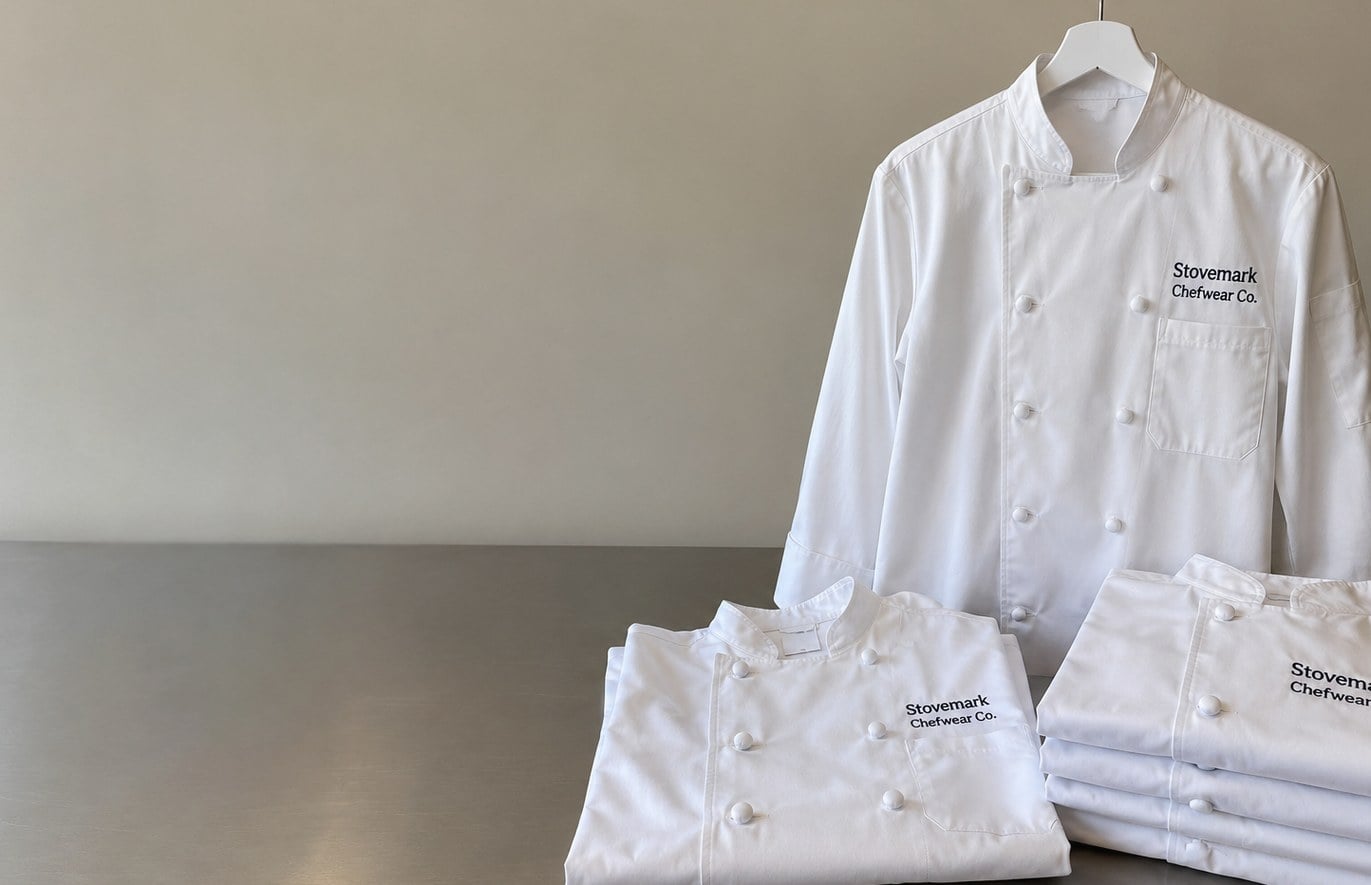
- Plan chef coats as a rotation per cook: one worn, one in the wash, one clean spare
- Laundry pickup schedules are the biggest driver of how many coats you need
- Hot-line stations wear out chef coats faster than pastry or garde manger
- Keep logo-only spares in the size tails for new hires
- Free mockup within 24 hours; about 2 weeks turnaround after approval
How many custom chef coats does each cook actually need?
Most cooks need enough custom chef coats to cover a full laundry cycle plus one spare, not one coat per shift. The right number for your kitchen comes from three things: how often coats are washed, how many shifts each cook works between washes, and how quickly a coat gets ruined by a spill mid-service. Count those first and the order size almost writes itself.
Think of every cook’s coats as a small rotation. One coat is on the body, one is in the wash or waiting for pickup, and one sits clean in the locker for the shift when a fryer splash or a burst sauce bag takes the first coat out of service. A kitchen with daily in-house washing can run a tighter rotation than a kitchen that waits on a weekly linen pickup, because coats come back faster.
The mistake most first-time buyers make is ordering by headcount alone. A headcount tells you how many people need a coat today. A rotation tells you how many chef coats it takes to keep every one of those people in a clean, branded coat for every shift until the next reorder.
How does your laundry setup change the chef coat order?
Your laundry setup is the single biggest driver of how many chef coats you need, because coats in transit are coats nobody can wear. Before you settle on a number, write down who washes the coats, how often, and how long a dirty coat is gone before it comes back clean and pressed.
| Laundry setup | What it means for quantity | Planning note |
|---|---|---|
| In-house laundry, washed daily | Smallest rotation per cook | Coats return fast, so spares cover stains and damage rather than wash time |
| Commercial laundry service on a pickup schedule | Larger rotation per cook | Cover every shift between pickups, plus coats that come back late or missing |
| Cooks wash coats at home | Middle rotation, varies by person | Plan for cooks who work back-to-back shifts and cannot wash overnight |
| Mixed arrangements across sites | Plan each site separately | One logo and spec, but different quantities per kitchen |
If you own your coats and send them to a commercial service, ask the service how many days a coat is typically away and how often items go missing. That answer tells you more about the right order size than any rule of thumb. Our chef coat uniform programmes page covers how multi-site kitchens hold one spec while planning different quantities per location.
Should every station get the same number of chef coats?
Stations do not wear out chef coats at the same speed, so the smartest quantity plans allocate coats by role rather than spreading them evenly. A grill or fry cook goes through coats faster than a pastry chef working a cool prep room, and a guest-facing executive chef needs a spotless coat at moments the rest of the brigade does not.
- Hot line, grill and fry: the heaviest staining and the most mid-shift changes, so give these cooks the deepest rotation. Short-sleeve or lightweight and vented chef coats are common here.
- Pastry and garde manger: cleaner work, so a lighter rotation usually covers it, though white coats in pastry still need a clean spare.
- Executive and sous chefs: fewer stains but more visibility. Plan a reserved clean coat for the pass, the chef’s table and any photo or press moment.
- Dishwashing and prep: wet work that soaks coats quickly; plan these rotations by how often the coat gets drenched, not by job title.
Allocating by station also helps when you mix styles in one order. You might run classic long-sleeve coats for the executive team and vented short-sleeve coats on the line, each with its own quantity, all carrying the same logo and placement. Customized Chef Coats can quote mixed styles together so the branding stays consistent across the whole kitchen.
How many spare chef coats should sit on the shelf for new hires?
Kitchens with regular turnover should hold a small shelf stock of logo-only chef coats in the sizes they hire most, so a new cook can be in uniform on day one. The right shelf depth depends on how often you hire, not on how big the team is today.
Look back at how many cooks joined over the past few months and which sizes they wore. If new hires arrive every few weeks, the shelf needs to cover the gap between hiring and your next reorder. If hiring is rare, a thin shelf in the middle sizes is enough, and anything unusual can wait for the next run.
Logo-only spares are the flexible choice because they fit any new cook. If your kitchen puts names on every coat, keep the shelf stock unnamed and add names when you next reorder, or let new cooks wear a logo-only coat until their named coats arrive. Our embroidered name chef coats page explains how names, titles and logos sit together on one coat so later additions still match.
Do not forget the size tails. The new hire is rarely a standard medium, and a shelf that only holds the middle of the size curve forces a rush order every time someone outside it joins.
How do seasonal swings and part-time staff affect the order?
Seasonal kitchens should size their chef coat order for the busiest stretch of the year, then decide how much of that peak to buy upfront and how much to stage. Summer patios, holiday banquets and event seasons can swell a brigade quickly, and those extra cooks need coats that match the core team.
Part-time and seasonal cooks usually need a shorter rotation than full-time cooks because they work fewer shifts between washes. Plan them as their own group in the order: same coat, same logo, lighter quantity per person. Shared coats between part-timers sound efficient, but sizing rarely lines up and shared coats tend to disappear.
If your peak is predictable, place the order early enough to cover mockup, approval and production before the first busy weekend. Customized Chef Coats sends a free mockup within 24 hours, and standard turnaround is about 2 weeks after you approve the design, with faster turnaround available through express shipping when the calendar is tight.
When is the right time to reorder custom chef coats?
The right time to reorder custom chef coats is before the rotation breaks, not after cooks start wearing stained or mismatched coats. Set a simple trigger and check it on a regular schedule, the same way the kitchen checks dry stock.
- Count the shelf. When the logo-only spare stock drops to the sizes you cannot do without, start a reorder.
- Inspect the rotation. Pull coats with frayed cuffs, failed closures, faded embroidery or stains that no longer lift, and count how many cooks are now short.
- Check the calendar. Look ahead for openings, seasonal peaks or a new menu launch that will bring new hires.
- Allow for turnaround. Work back from about 2 weeks of production plus shipping, so new coats land before the shortage becomes visible on the line.
- Reuse the approved spec. Send the same logo, placement and style details so the reorder matches the first batch.
Reordering in smaller, regular batches keeps every coat in the kitchen looking current, rather than leaving a mix of crisp new coats and tired originals from one large order that has aged together.
What should you send to get a quote for the right quantity?
A quote reflects your real needs when it is built from your quantity plan rather than a guess. Before you fill in the custom quote form, gather a short brief so Customized Chef Coats can confirm styles, sizes and the minimum that applies to the coat you choose.
- The number of cooks by station, and the rotation depth you want for each group
- The coat styles you want, such as classic double-breasted, executive or vented
- A size breakdown, including women’s fits and the size tails
- How many logo-only spares you want on the shelf
- Whether names or titles go on each coat
- Your logo file and any deadline you are working toward
From there the process is simple: free mockup within 24 hours, unlimited free revisions, and you pay nothing until you approve the design. If you are ordering for a large brigade, the bulk custom chef coats with logo guide walks through collecting sizes and packing coats by name, and the how it works page shows each step from quote to delivery.
Frequently asked questions
Does a laundry pickup schedule change how many chef coats each cook needs?
Chef coats on a commercial laundry pickup schedule are away for days at a time, so each cook needs enough coats to cover every shift between pickups plus a spare for stains. In-house daily washing allows a tighter rotation. Ask your laundry service how long coats are typically gone, then share that with Customized Chef Coats when you request a quote.
Do part-time cooks need as many chef coats as full-time cooks?
Chef coats for part-time cooks can usually run a shorter rotation, because part-timers work fewer shifts between washes. Plan them as a separate group in the order with the same coat and logo as the core team but a lighter quantity per person. Avoid shared coats between part-timers, since sizes rarely match and shared coats tend to go missing.
Should a grill cook have more chef coats than a pastry chef?
Chef coats on the grill, fryer and hot line stain faster and need more mid-shift changes than coats in a cool pastry room, so grill cooks usually need the deeper rotation. Allocate quantity by station rather than spreading coats evenly. Customized Chef Coats can quote different styles and quantities for each station while keeping the same logo and placement across the kitchen.
Should an executive chef keep a reserved chef coat for guest-facing moments?
Chef coats worn at the pass, the chef's table or during press and photo moments need to be spotless, so many executive chefs keep one clean coat set aside for those times. Build that reserved coat into the quantity plan rather than borrowing from the daily rotation. A crisp executive style with the restaurant logo works well for this role.
Should a chef coat order include sizes nobody on the current team wears?
Chef coat orders for kitchens that hire regularly should include a few spares in the size tails, because new cooks rarely all fit the middle of the size curve. Without them, every unusual size becomes a rush order. Keep these spares logo-only so they fit any new hire, and list them separately on your quote request to Customized Chef Coats.
Can logo-only chef coats have names added when a new cook starts?
Chef coats held as logo-only shelf stock let a new cook wear a matching uniform on day one. Names can be added on the next reorder, or the new cook can keep the logo-only coat as a spare once named coats arrive. Ask Customized Chef Coats to keep your name font, thread color and placement on file so later additions match the originals.
How do seasonal hiring peaks affect the size of a chef coat order?
Chef coat orders for seasonal kitchens should be planned around the busiest stretch of the year, when patio service, banquets or event work swell the brigade. Decide how much of that peak to buy upfront and how much to stage as a later run. Order early enough to cover the 24-hour mockup, approval and about 2 weeks of production.
What signs show it is time to reorder custom chef coats?
Chef coats need reordering when the logo-only spare shelf runs low in key sizes, when coats show frayed cuffs, failed closures or stains that no longer lift, or when new hires are coming. Check these signs on a regular schedule, the same way the kitchen counts dry stock, and reorder before cooks start wearing tired or mismatched coats.
How can a kitchen count how many chef coats it really uses in a week?
Chef coat usage is easiest to measure by tracking one ordinary week: note how many clean coats each station takes per shift, how many are swapped mid-service, and how many are away at the laundry at any moment. Those three counts show the true rotation your kitchen needs, which is far more reliable than ordering by headcount alone.
How many chef coats should a kitchen plan to lose to damage each year?
Chef coats are lost to burns, permanent stains, failed closures and laundry mix-ups, and the rate depends on the station, the fabric and the wash arrangement. Rather than guessing, inspect the rotation after a few months and count what has been retired. Customized Chef Coats can then match replacements to the original spec so the kitchen stays consistent.
Does mixing classic and vented chef coats make quantity planning harder?
Chef coats in mixed styles are simple to plan if each style is treated as its own group with its own rotation and spares. Classic coats might cover the executive team while vented coats go to the hot line. Keep the logo, thread color and placement identical across styles so the kitchen still looks like one brigade.
Should a restaurant group plan chef coat quantities centrally or by location?
Chef coat quantities work best planned by location, because each kitchen has its own laundry setup, menu heat and hiring pace, while the logo, coat styles and placement stay set centrally. Customized Chef Coats can quote several locations together with different quantities for each, so every site gets the right rotation and every coat still matches across the group.
Get a free mockup for your chef coats
Send your logo or idea and the quantity you have in mind. Customized Chef Coats returns a free mockup within 24 hours, you approve the design before anything is produced, and standard turnaround is about two weeks with faster options available. Get a custom quote.